As an Amazon Associate, we earn from qualifying purchases. Some links on this site are affiliate links at no extra cost to you. Our recommendations are based on thorough research and editorial judgment.


Panning Technique 101: Smooth Movement Without Expensive Gear

Panning photography, an essential skill for capturing motion, can be mastered without expensive gear. By following a moving subject with smooth, controlled camera movement, we achieve sharp images against blurred backgrounds. Utilizing shutter speeds between 1/8 and 1/60 of a second, we can balance clarity and motion. Practicing with ideal subjects—like racing cars or birds in flight—helps refine our technique. Let’s explore effective tips and techniques to elevate our panning photography skills further.
Key Takeaways
- Utilize your body as a stabilizer by following the subject’s motion smoothly, minimizing gear dependency.
- Practice panning techniques with a regular camera or smartphone to build skills before considering expensive equipment.
- Experiment with shutter speeds between 1/8 to 1/60 of a second for effective motion blur without costly gear.
- Employ a smooth, sweeping arc in your movement to maintain consistency and clarity in your shots.
- Focus on subjects like cyclists or pets which allow for dynamic panning without needing high-end gear.
Understanding Panning: Basics and Benefits
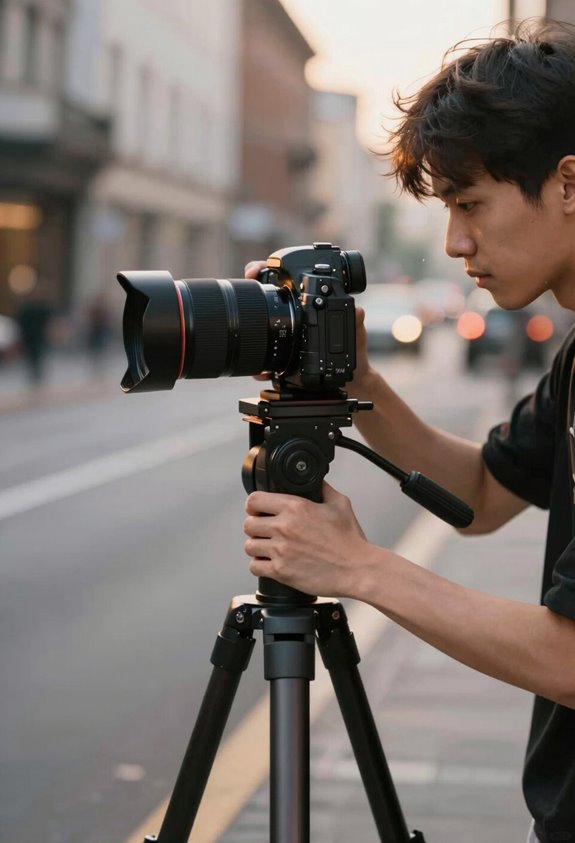
Hey there! If you’re interested in photography, understanding panning is a fun technique to explore, especially if you want to capture that thrilling sense of motion in your pictures. Basically, panning means moving your camera along with a moving subject, like a runner or a speeding car. When you do it right, you end up with a wonderfully sharp subject against a beautifully blurred background, which really brings the image to life.
To get started with panning, you might want to practice on faster-moving subjects. Think about snapping shots of racing motorcycles or birds zooming across the sky. These types of subjects tend to create more noticeable motion blur, giving your photos that dynamic feel. Don’t forget about shutter speed, either! Aim for something between 1/8 and 1/60 of a second. This range helps you freeze your subject while allowing the background to swoosh by.
With a little practice, you’ll get the hang of smooth camera movements, which will improve your timing and creativity. Pretty soon, you’ll be able to differentiate your work from more traditional, static images and really showcase your unique style. So, why not grab your camera and give panning a shot? It’s a great way to elevate your skillset as we explore more photography techniques together! Using a camera equipped with image stabilization can help achieve smoother panning shots with less blur on the subject.
Essential Camera Settings for Captivating Shots

Hey there! So, after you get the hang of panning, let’s talk about camera settings to really make your motion shots pop. Getting into manual exposure or shutter priority mode is a smart move because it helps you keep your shutter speed steady. You’ll want to aim for anywhere between 1/8 and 1/60 of a second. This sweet spot lets you achieve that lovely motion blur you see in captivating shots, while still keeping your subject nice and sharp.
To ensure your moving subject stays in focus, it’s super helpful to use focus tracking settings like AI Servo or AF-C modes. These work wonders, especially when you’re capturing something quick, like a running dog or a car zooming by. In those cases, you might need to slightly bump up your shutter speed to avoid too much blur while still showing that sense of movement. Utilizing a camera with a fast hybrid autofocus system significantly enhances the accuracy and smoothness of your focus during motion shots.
Which Subjects Work Best for Panning Photography?

Hey there! If you’re curious about panning photography, you’ll want to know which subjects work best for capturing that dynamic motion blur we all love. Fast-moving subjects really shine here. Think about racing cars zooming past or athletes sprinting down the field. They create that dramatic effect that makes your photos pop!
On the other hand, while you might think walking people could be interesting, they often don’t provide enough motion blur for effective panning shots. If you want to really nail it, go for smooth and predictable movements—like bicycles or trains. They maintain a steady speed, which makes it easier for you to track them with your camera.
Now, keep in mind that subjects with erratic movements, such as jumping athletes or football players making sudden turns, can throw a wrench in your panning efforts. They can be tricky to capture sharply because their movements are less consistent. So, picking the right subjects is essential if you want those eye-catching panning shots. Just imagine the thrill of catching a skateboarder gliding smoothly down the street—it’s all about knowing what to look for! What kind of subjects do you enjoy shooting?
To enhance your recordings of dynamic subjects, consider using wind noise reduction tools like microphone deadcats to ensure clean audio even outdoors.
Mastering Panning Photography Techniques
Hey there! If you’re looking to master panning photography techniques, let’s break it down in a way that makes it easy to understand. Essentially, panning is all about capturing that sense of motion while keeping your subject sharp and clear. One key tip is to use a shutter speed between 1/8 and 1/60 of a second. This setting gives you that beautiful blur in the background, making your subject pop.
Another crucial part of getting great panning shots is your camera movement. You want to move your camera smoothly along with your subject. Try practicing a steady arc as you follow something like a cyclist zooming by. This helps keep the subject focused while the scenery blurs around them.
Also, utilize focus tracking settings—like AI Servo mode if you’re using a Canon—to help maintain focus on your subject throughout the whole motion. A good practice tip is to start shooting a bit before your subject reaches the perfect frame and continue shooting for a second or two after, which increases your chances of snagging that perfect shot.
Using a fluid head tripod can greatly enhance the smoothness of your panning motion, ensuring stable and professional-looking footage.
Effective Tips for Practicing Panning
Practicing panning techniques can really elevate your photography. Imagine capturing a photo of a dog sprinting through the park, where you manage to freeze the action while giving a sense of speed. To get started, try some panning drills with fast-moving subjects like those playful pups. They’re usually easier to track and won’t drive you too crazy!
When you’re ready, set your camera to a shutter speed between 1/8 and 1/60 of a second. This range gives you that lovely motion blur that really brings your shots to life while keeping your subject in focus. You might want to use manual exposure or shutter priority mode to keep that shutter speed consistent, no matter the lighting around you.
An important tip is to start your panning motion just before your subject enters the frame and follow through smoothly even after you’ve taken the shot. This way, you capture the entire motion, which makes your photos feel alive. With regular practice and a bit of patience, you’ll find your tracking skills improving, making those dynamic panning shots sharper and more compelling. Using RGB video lights can also help enhance your subject’s visibility and color accuracy in low-light conditions while practicing indoors.
Avoid These Common Pitfalls in Panning Photography
Hey there! If you’re looking to capture some amazing panning shots, you’re in for a treat. But let’s chat about some common pitfalls you’ll want to sidestep to truly nail that dynamic effect. One big mistake is not keeping your camera motion nice and smooth. Think of it like following a moving object with your eyes—if you jerk your head suddenly, you might miss the action. Practice sweeping your camera from side to side; it makes a world of difference in avoiding those pesky jerky images.
Another thing to keep in mind is your shutter speed. If it’s too fast, you won’t get that beautiful motion blur, and if it’s too slow, your subject might end up a blurry mess. A good rule of thumb is to aim for speeds around 1/8 to 1/60 seconds, but play around with it based on how fast your subject is moving. Also, be sure to focus on your subject ahead of time—if you wait until it’s right in front of you, you might miss that crisp shot.
Lastly, if you’re relying on autofocus, make sure you adjust the settings for tracking moving subjects. Otherwise, your shots might look chaotic and unfocused, which can totally throw off your creative vision. With a little practice and these tips in mind, you’ll be well on your way to capturing stunning panning photography—let’s keep exploring more ways to enhance your shot! Also, consider using high capacity batteries for longer shooting sessions to make sure your gear stays powered throughout your creative process.
Creative Ways to Use Panning in Your Photos
Panning can be such an exciting technique to play with in your photography! It’s not just for those fast-moving moments, like cars zooming by or athletes sprinting across a field. Panning really shines when you want to create a sense of motion that adds storytelling flair to your shots. For example, if you’re photographing dogs running around at the park or birds soaring through the air, try setting your shutter speed between 1/8 to 1/60 of a second. This range will give you that lovely motion blur while still keeping your subjects nice and crisp in focus.
To get the best results, practice tracking your subjects with your viewfinder crosshairs. Start panning your camera before the subject comes into the frame and keep moving even after they pass by. This technique not only offers fresh angles but also helps in developing your unique artistic voice. It’s like adding a personal signature to each photograph!
Using a 4K camcorder with built-in gimbal stabilization can help achieve even smoother panning videos without expensive equipment.
Frequently Asked Questions
What Is the 7 Second Pan Rule?
The 7 Second Pan Rule helps us capture motion beautifully. By practicing smooth panning, avoiding common mistakes, and exploring creative angles, we can create dynamic images that highlight our subjects against a blurred backdrop.
What Gear Do I Need for Panning Shots?
For smooth panning, we’ll need careful tripod selection and a lens with stabilization. Without these, we’re like artists without brushes, struggling to create the masterpieces we envision. Let’s capture motion with elegance together!
What Is the Panning Technique?
The panning technique’s all about creating motion blur while we track our subject in motion, giving our shots that cinematic style. It takes practice, but we’ll capture stunning images with perfect focus and smoothness.
What Are the Best Settings for Panning Shots?
When we’re capturing motion, some panning settings tips include adjusting shutter speed for blur, using camera stabilization methods, and honing our technique. Let’s focus on keeping our subjects sharp while embracing the art of movement!


