As an Amazon Associate, we earn from qualifying purchases. Some links on this site are affiliate links at no extra cost to you. Our recommendations are based on thorough research and editorial judgment.


Backlit Scenes: How to Expose Faces Correctly

To expose faces correctly in backlit scenes, we should use spot metering to prioritize the subject’s face, adjusting settings like aperture to around f/2.8 for a blurred background. We often need to increase exposure by +1 to +2 stops if the face appears dark. Utilizing fill flash can enhance facial brightness without losing background vibrancy. With careful positioning of our subjects relative to the light source, we’ll create enchanting images where the subject shines against a glowing backdrop. Continue with us to discover more techniques.
Key Takeaways
- Use spot metering to ensure proper exposure for the subject’s face against a bright backlit background.
- Set a wider aperture (f/2.8 or f/4) to create a soft, blurred background.
- Apply exposure compensation (+1 to +2 stops) if the subject appears too dark in the shot.
- Utilize fill flash to brighten the subject’s face and maintain background vibrancy.
- Position the subject with the sun just behind them to achieve optimal lighting effects.
Understanding the Basics of Backlighting

You know, backlighting can really create some stunning effects in photography! It happens when your light source, like the sun, shines from behind your subject. This can give your photos a magical glow, especially during that lovely time we call the Golden Hour, just after sunrise or before sunset.
To make the most of backlighting, you might want to focus on your subject’s face. You can do this by using spot metering, a technique that lets you measure the light on a specific part of your scene. If you’re taking a portrait, for example, make sure to adjust the exposure so that your friend’s face isn’t lost in shadow. Another handy tip is to use reflectors or even something simple like a piece of white cardboard to bounce light back onto your subject, helping bring their features into the spotlight without making the shadows too harsh.
Getting a handle on backlighting opens up a world of creativity in your photos. It helps you frame your shots in a way that captures both light and shadow beautifully—setting up for your next adventure in photography! For capturing the best detail in these lighting conditions, using camcorders with a CMOS image sensor can significantly enhance clarity and color accuracy.
Essential Camera Settings for Backlit Photography

Backlighting can really work wonders in photography, but it does come with its own set of challenges. When you’re shooting with the sun or a bright light source behind your subject, you’ll want to make sure their features stay well-lit. A great way to do this is by using spot metering. This setting focuses your camera’s exposure on the subject’s face, making sure it stands out even against a bright background.
Next, let’s talk about aperture. Setting your aperture wider—think around f/2.8 or f/4—helps to blur the background a bit, which directs attention to your subject. This soft background can nicely separate them from that dazzling light. And if you notice your subject appearing a bit too dark, don’t hesitate to use exposure compensation. Bumping it up by +1 to +2 stops can brighten things up perfectly.
Oh, and if you’re shooting during that magical golden hour, try using a fill flash! It can add just the right amount of light to your subject’s face, helping to balance the bright background. So when you’re out there experimenting with backlighting, keep these tips in mind. They’ll help you capture stunning images that really pop! Now, let’s explore how to adjust your focus for those dreamy shots.
For more precise control during your shoot, consider using a wired LANC remote control to adjust zoom and recording smoothly without disturbing your setup.
Effective Metering Techniques for Backlit Scenes
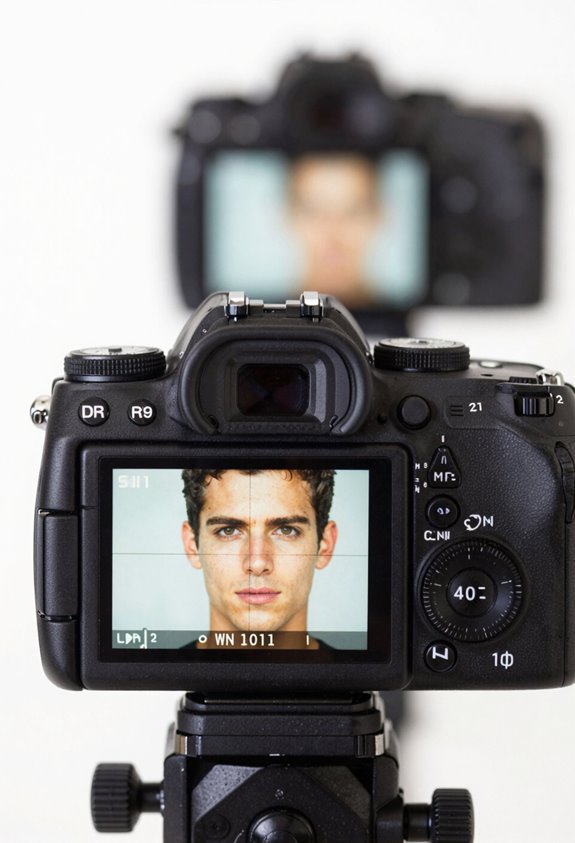
When it comes to capturing those gorgeous backlit scenes, mastering some effective metering techniques is key. Imagine you’re shooting a portrait with the sun shining behind your subject. To ensure they stand out against that bright background, try using spot metering—it’s like shining a flashlight right on your subject’s face to get the exposure just right. This helps you avoid the pesky issue of their features getting lost in the shadow.
Once you’ve focused on your subject and got the exposure set, remember to lock those settings. This way, even if the background is super bright, your subject will stay beautifully lit. Another handy tip is to carry a gray card with you. It’s a great tool for checking your exposure—it’ll help ensure skin tones look natural and not washed out or too dark.
Don’t forget to tweak your exposure compensation a bit! Sometimes bumping it up by 1 to 2 stops can make a huge difference, especially when the background is really glowing. After each shot, take a moment to review your histogram. It’s your best friend to see if you’re capturing detail in both the shadows and highlights. For precise exposure control, using monitors with features like customizable histograms can greatly enhance your workflow.
Using Fill Flash for Better Backlighting Exposure
You know those moments when you’re trying to photograph someone but the background is so bright that your subject looks like a shadow? That’s where fill flash comes in! It’s a fantastic way to brighten up your subject’s face while still keeping that vibrant background intact. Imagine snapping a picture of a friend against a brilliant sunset; without fill flash, your friend could end up looking lost in the glare.
To get the best out of fill flash, you’ll want to tweak the flash power depending on how bright it is outside and how far away your subject is. If you check your camera’s histogram after you take a shot, it’ll tell you right away if you need more or less light. For example, if you notice your subject still looks too dark, bump up the flash just a little.
Also, don’t forget about using reflectors! They can work alongside fill flash to bounce some of that gorgeous natural light back onto your subject, softening shadows and making everything look more flattering. It’s a simple technique that can take your photos to the next level, especially when the lighting is tricky. So next time you’re out shooting, remember these tips, and you’ll capture those perfect moments effortlessly!
To further enhance your audio-visual production, consider using high directivity microphones, which significantly improve clarity in noisy environments.
Positioning Your Subject to Capture Optimal Light
So, let’s talk about how to position your subject to capture the best light when you’re shooting portraits. Once you’ve used fill flash to brighten your subject in tricky lighting, it’s all about finding that perfect spot to take advantage of natural light. For instance, have your subject stand with the sun just over their shoulder or peaking from behind their head. This way, the light creates a lovely glow around them without drowning out their features.
You can also make use of nearby trees or buildings to soften those harsh rays of sunlight. They act like a natural filter, giving you a more balanced look. Plus, playing around with the angle and distance can really help. Position your subject so they’re blocking some of that incoming light. This reduces any haze in the photo while keeping their face nice and bright. Using multiple outputs in your lighting setup, similar to how power banks manage devices, can help balance light sources effectively.
Tackling Common Challenges in Backlit Photography
Hey there! If you’ve ever tried your hand at backlit photography, you know it can be a bit tricky. But don’t worry, once you grasp a few simple techniques, you’ll see some amazing results. For starters, using spot metering focused on your subject’s face can really help you nail the right exposure when you’re shooting against a bright background. This way, you avoid those frustrating dark faces while still keeping those beautiful highlights intact.
Another tip is to bring along a reflector. It’s a fantastic tool to bounce some of that light back onto your subject, making them pop in contrast to the bright light behind them. Plus, keeping an eye on your histogram is crucial—it helps you balance out those bright spots while ensuring your subject’s features remain clear and vibrant.
Lastly, don’t be afraid to experiment with your angles. Changing your position in relation to the light source can help minimize lens flare and allow you to capture that lovely glow we all love. Once you start playing around with these techniques, you’ll be surprised at how much more control you have over your backlit photos. Ready to step outside and give it a shot? Utilizing cameras with excellent low-light capabilities can also significantly improve your exposure in challenging lighting conditions.
Editing Tricks to Make Your Backlit Portraits Shine
Capturing stunning backlit portraits is just the beginning; let’s talk about how post-processing can really make your images shine. First off, you want to adjust the exposure. Think of it like balancing a scale: you need just enough light on your subject’s face to keep it bright and lively while still holding onto that gorgeous warm glow from the backlight. A quick tip? Pull down those shadows a bit to keep the details popping without overpowering the dreamy background.
Next, white balance is our best friend in this process. If you want that golden hour warmth in your portraits, adjust the white balance so your subjects’ skin tones look natural and vibrant—not too orange or washed out. A fun trick is to play around with film-inspired presets; they can really amplify that soft, magical quality you often see in backlit photography. As you tweak your images, remember to keep your edits subtle and consistent—this helps maintain that authentic feel of natural light and ties your whole portrait series together nicely.
For the best results, consider using cameras equipped with Electronic Image Stabilization to ensure your raw footage remains sharp before you start editing.
Expert Tips for Mastering Backlit Photography
Hey there! If you’re looking to master backlit photography and really make your images pop, I’ve got some handy tips that can help. First off, it’s super important to adjust your camera settings. Use spot metering on your subject’s face when you’re shooting in bright backlighting. This will help ensure that your subject is exposed just right, even when there’s a lot of light behind them.
Another great trick is to use a reflector. This is a simple tool that can bounce some light onto your subject’s face, cutting down those pesky dark shadows. It keeps that beautiful, soft glow from the light behind while adding just the right amount of illumination in the front. For instance, you might hold a white poster board or a collapsible reflector to brighten up your subject’s features.
Shooting during the golden hour—right after sunrise or just before sunset—can also make a world of difference. The light is softer and warmer, giving your backlit shots a dreamy feel. Position your subject at a slight angle away from the sun; this helps you avoid lens flare while still giving them that gorgeous halo effect around the edges.
Lastly, keep an eye on your histogram to ensure you’re not losing any detail in the brightest areas. This means you can really focus on capturing your subject beautifully, even in those tricky lighting situations. Once you feel comfortable with these techniques, you might find yourself excited to experiment even more with different settings and environments!
For reviewing your shots on the go, using a portable 5-inch monitor can help you better evaluate exposure and focus right after the shoot.
Conclusion: Elevating Your Backlit Photography Skills
Have you ever tried backlit photography? It can do wonders for your images, turning ordinary shots into breathtaking portraits that really showcase your subjects! When you’re in a backlit situation, using spot metering on your subject’s face helps ensure you capture the right exposure. For instance, if you’re shooting a friend against a vibrant sunset, adjusting your meter to their face will keep them from turning into a shadow.
Another nifty trick is to use fill flash. This method brightens your subject’s face without losing the stunning background glow. Imagine taking that same sunset shot but with your friend’s features clearly illuminated and still showing the beautiful colors behind them.
Don’t forget to check your histogram after each shot! This little tool can guide you in making adjustments to protect highlight details. Also, play around with your angles and distances. If the sun is too harsh, slight changes can help you find that perfect glow without overwhelming glare.
As you keep practicing with manual settings, you’ll start to really understand how light interacts with your images. This knowledge is key for nailing backlit photography every time. So, why not grab your camera and give it a shot? The results might surprise you!
Using a camera with good image stabilization will also help you maintain sharpness when manually adjusting your exposure in backlit conditions.
Frequently Asked Questions
How to Expose for Backlit Portraits?
To expose for backlit portraits, we should use spot metering modes on our subject’s face, consider light direction, and position them carefully to minimize shadows and enhance their natural glow. Practice makes perfect!
How to Correctly Expose an Image?
We can’t just guess exposure settings! To correctly expose an image, we balance the exposure triangle—aperture, shutter speed, and ISO—considering histogram analysis and dynamic range to capture rich details without clipping highlights.
What Is the 20-60-20 Rule in Photography?
The 20-60-20 rule in photography suggests a 20 60 ratio of highlights, mid-tones, and shadows. It guides our lighting techniques while balancing the exposure triangle, creating harmonious and visually impactful images that engage viewers.
What Is the 3/4 Rule in Photography?
The 3/4 rule in photography guides us to position our subject’s face towards light, angling the body at 45 degrees. This enhances portrait composition, highlights shadows, and creates a more dynamic, three-dimensional image.


