As an Amazon Associate, we earn from qualifying purchases. Some links on this site are affiliate links at no extra cost to you. Our recommendations are based on thorough research and editorial judgment.

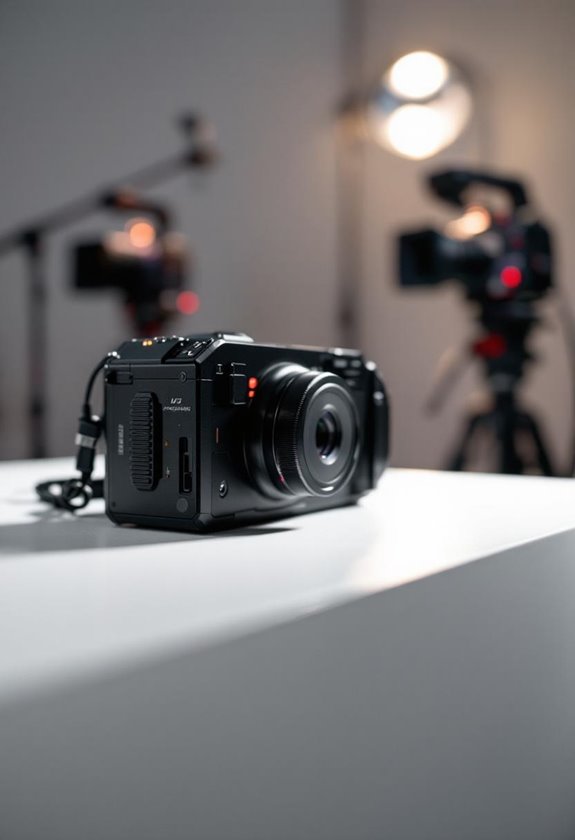
Sensor Size for Video: Why Bigger Often Looks Better in Low Light

Larger sensors, like full-frame models (36x24mm), excel in low-light video due to their ability to gather more light—approximately 2.5 times that of smaller APS-C sensors (24x15mm). This increased light capture reduces noise and enhances dynamic range, allowing for the retention of details in both shadows and highlights. With bigger pixels, around 10.4 micrometers, we achieve improved low-light performance, contributing to cleaner, more professional-looking footage. Discover more on how sensor technology continues to advance and shape video production.
Key Takeaways
- Larger sensors capture more light, reducing noise and improving image quality in low-light conditions.
- Full-frame sensors have larger pixels, enhancing low-light performance and reducing graininess in footage.
- Increased dynamic range in larger sensors maintains detail in both shadows and highlights.
- Fast lenses paired with larger sensors allow for more light intake, improving low-light shooting capabilities.
- Advancements in sensor technology continue to improve performance in low-light environments, reshaping video production.
How Does Sensor Size Impact Low Light Performance?
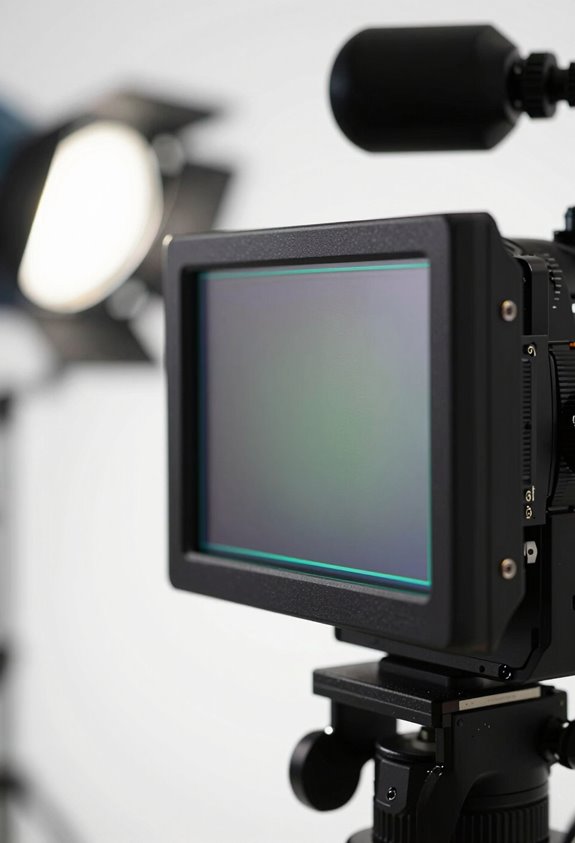
When we talk about how sensor size impacts low-light performance, it’s important to remember that larger sensors, like full-frame ones, are better at capturing light. Why? It’s all about those bigger pixels. A full-frame sensor usually has pixels that are around 10.4 micrometers compared to about 6.7 micrometers in an APS-C sensor. This means that full-frame sensors can gather nearly two and a half times more light. So, when you’re shooting in dim conditions, you’ll notice clearer images with less noise, especially at higher ISO settings.
Take the Canon 5D Mark II, for example. Although it has a slightly higher megapixel count than the Canon 7D, its larger pixels give it almost double the light-gathering ability. This advantage is what allows photographers to capture stunning night shots or indoor scenes without losing much quality. In summary, a larger sensor can significantly enhance your low-light performance, leading to better overall image quality. Now, let’s explore how other features, like lens choice, can also play a role in your low-light photography. Many professional 4K camcorders benefit from larger sensor sizes which improve low-light video quality and dynamic range.
The Science of Light Capture in Video Production
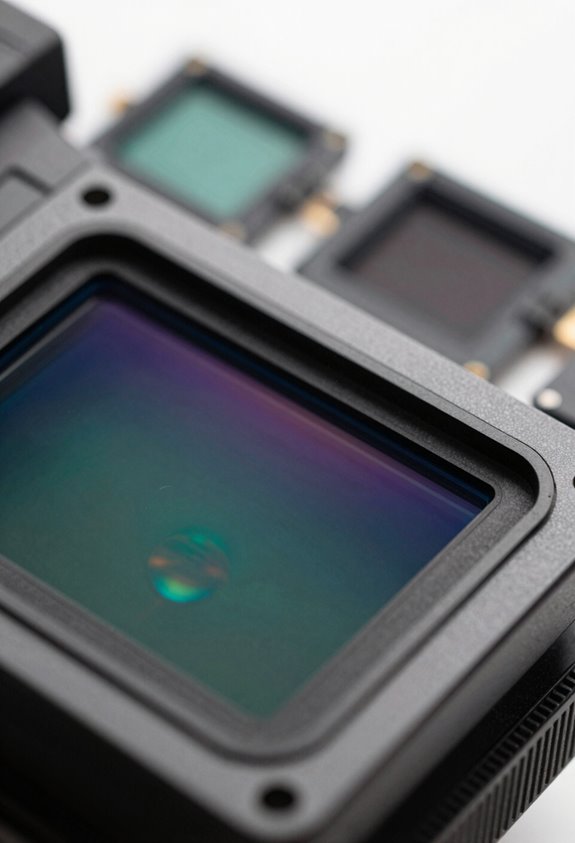
Hey there! When it comes to capturing light in video production, the sensor technology in our cameras plays a huge role. Think of a full-frame sensor—those big ones that measure around 36x24mm. They can gather way more light than smaller sensors, like APS-C ones, thanks to their bigger pixels, which are usually around 10.4µm. This means that if you’re shooting in low-light situations, a full-frame sensor can grab about 2.4 times more light, which is pretty impressive!
For example, if you’re filming indoors during a sunset, that extra light gathering power helps you avoid grainy footage. Plus, because full-frame sensors have a larger surface area, they can cut down on noise, giving you smoother video even in challenging light. You can shoot at lower ISO settings and wider apertures, leading to clearer images. Cameras like the Blackmagic Pocket Cinema Camera 6K utilize a Super 35 sensor that balances sensor size and performance to excel in various lighting conditions.
What Is Dynamic Range and How Does It Affect Noise Levels?
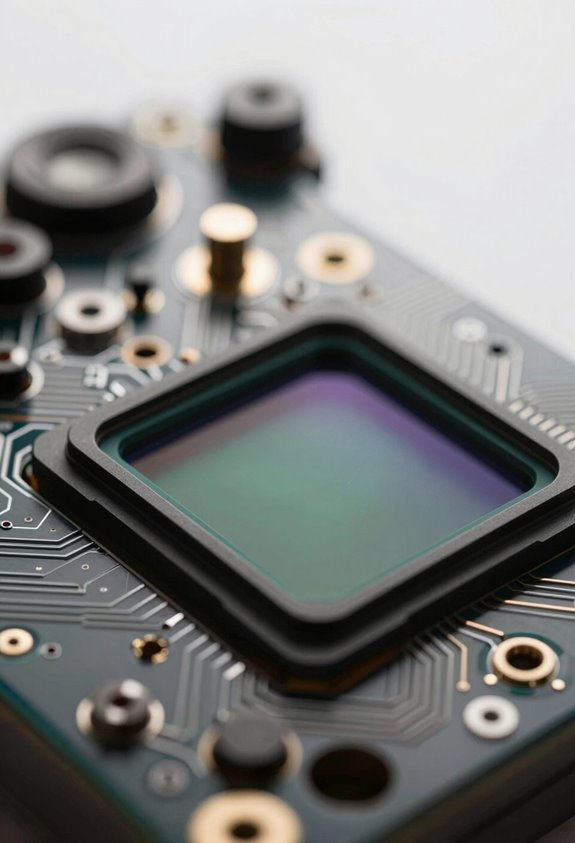
Dynamic range is super important in video production—it’s all about the range of light intensities that a camera can capture accurately. Imagine you’re shooting a sunset; a camera with a large sensor can gather more light, which means it handles the bright sky and the darker foreground much better. This broader dynamic range helps keep detail in those tricky shadow and highlight areas, reducing noise, especially when you’re filming in lower light.
When a camera has a higher dynamic range, it processes the incoming signals more effectively. This means it doesn’t need to amplify the signal as much, which helps lower noise levels. Think about it this way: a larger photosite on the sensor can pick up more light, improving the signal-to-noise ratio, so you end up with images that look cleaner and less grainy. For instance, if you were filming a night scene, a camera with a good dynamic range would show clear details in both the bright streetlights and the dark shadows, making your footage look more professional.
Understanding dynamic range can really help when you’re adjusting your exposure in post-production. You’ll find it easier to tweak those highlights and shadows without losing detail or introducing noise. It’s a key element in creating high-quality video that stands out! Additionally, selecting a camera with strong low-light performance can significantly enhance your footage quality in challenging lighting conditions.
Top Lens Choices for Maximum Sensor Efficiency
Hey there! So, if you’re looking to get the most out of your camera’s sensor, choosing the right lenses is super important. For full-frame cameras, consider grabbing a lens with a wide aperture, like f/1.4 or f/1.8. These lenses let in loads of light, which really helps when you’re shooting in low light situations—your images will turn out way clearer and more vibrant.
Prime lenses are particularly great in these scenarios. They have a simple design, which means fewer optical issues and a nice, creamy depth of field. Think of it this way: if you’re aiming for those gorgeous blurry backgrounds, a prime lens can make a real difference. On the flip side, if you’re using a crop sensor camera, a fast zoom lens like the Sigma 18-35mm f/1.8 can be a solid choice. Just remember that the crop factor means you’ll need to use wider focal lengths than you might think, which can affect how shallow your depth of field appears. For recording high-quality audio to complement your video, consider using a Sennheiser MKE 600 shotgun microphone for professional sound capture.
Full-Frame vs. APS-C Sensors for Video
Hey there! If you’re getting into video production, it’s super important to know the difference between full-frame and APS-C sensors. Full-frame sensors are about 36x24mm in size and have bigger photosites, which means they can capture more light—great news for filming in dimly lit spaces. In contrast, APS-C sensors are smaller, around 24x15mm, and have smaller photosites. So, if you’re shooting at night or in challenging lighting conditions, a full-frame sensor can help you keep your ISO settings lower. This way, you get less noise in your videos, which essentially just means clearer, cleaner visuals.
Another cool thing about full-frame sensors is their dynamic range. They can pick up more details in both bright highlights and deep shadows, giving your footage that vivid look. Plus, they can create that dreamy, shallow depth of field effect, which is perfect for emphasizing your subjects and blurring out distracting backgrounds. For instance, if you’re filming a talking head segment, a full-frame camera can help your subject pop against a softly blurred backdrop while an APS-C sensor might keep more of that background in focus, changing the mood of your shot.
Many professional cameras with full-frame sensors also offer advanced image stabilization features, like optical or hybrid stabilization, which help produce smooth, steady footage even in handheld shooting scenarios.
How Depth of Field Affects Low Light Video Quality
You know, when we’re working on video projects, we often think about lighting and composition, but depth of field can really make or break things, especially in low light. Larger sensors, like those in full-frame cameras, are fantastic because they give us a shallow depth of field. This means we can blur the background beautifully, creating that dreamy bokeh effect while keeping the subject in sharp focus.
For example, if you’re shooting a nighttime scene of a musician performing, a full-frame sensor can help the performer pop out against those twinkling city lights in the background, making your footage look really cinematic. This is because larger sensors gather more light, letting us use lower f-stop values. So, not only does this enhance clarity, but it also helps reduce noise, which is super important in low light conditions.
In contrast, smaller sensors might keep more detail in the background, which can sometimes make the video look muddled. By choosing a larger sensor, we can really separate our subject from distracting elements around them. It’s all about making your subjects stand out and ensuring your footage captures that sharp focus. So, next time you’re out filming in the dark, think about the depth of field and sensor size—it’s a simple tweak that can elevate your work immensely! Additionally, combining a large sensor with advanced image stabilization can further enhance the quality of your low light footage.
Affordable Gear for Low-Light Video Shooting
If you’re looking to capture stunning low-light video without emptying your wallet, let me share some great gear options that really deliver! Fast zoom lenses, like the Sigma 18-35mm f/1.8, are fantastic because they let in more light, which is super helpful when you’re shooting in dim conditions. This means you can maintain better quality without cranking up the ISO too high, which can cause graininess in your shots.
Another solid choice is the Fuji X-T4. It’s compact yet offers video quality that rivals those pricier full-frame cameras. It’s perfect for filmmakers who need to travel light but still want that professional look. Plus, don’t forget about affordable LED lights. Using these can really help brighten up your scenes without needing to boost your ISO – this way, you maintain clean, crisp footage.
If you want to experiment further, consider renting fast prime lenses or full-frame cameras for specific projects. This gives you the flexibility to tackle tricky lighting situations while keeping your budget in check. So whether you’re shooting a friend’s event or testing out your skills, there’s plenty of accessible gear to help you shine in those low-light moments! Additionally, some camcorders come equipped with 1-inch MOS sensors that significantly enhance performance in low-light conditions, offering vibrant colors and detailed imagery.
Future Trends in Sensor Technology and Video Production
Hey, have you noticed how sensor technology is really shaking things up in video production? As filmmakers look ahead, we’re about to see some pretty exciting advancements that could totally change the game. For instance, large sensors are getting some serious upgrades, especially with innovative designs like backlit sensors. These bad boys are fantastic because they perform way better in low light, meaning we can shoot crisp, clear videos even when the lighting isn’t perfect!
But here’s the cool part—these advancements mean that even smaller sensors can produce results that rival those of full-frame cameras. So, if you’re working with a compact system, you don’t have to worry about sacrificing quality. Plus, there are high-quality lenses being developed specifically for these smaller sensors, which makes them super versatile. They help enhance the image quality by improving the signal-to-noise ratio, particularly in tricky lighting situations, like when you’re shooting at night or indoors.
What’s also interesting is how the camera rental market is evolving. Now, renting larger sensors is becoming more accessible, which means that aspiring filmmakers can create stunning video content without breaking the bank. With all these changes on the horizon, it’s clear that the future of video production is looking bright and full of possibilities! As we think about these advancements, it’s exciting to imagine how they’ll influence storytelling techniques and creative expression in filmmaking. Additionally, improvements in night vision capabilities are expanding creative possibilities for shooting in a wider range of lighting conditions.
Frequently Asked Questions
Does Sensor Size Affect Video Quality?
Yes, sensor size notably affects video quality. Larger sensors enhance dynamic range and color accuracy, improve low light capabilities, reduce noise, and optimize lens compatibility, all while enriching exposure dynamics and depth perception for stunning video resolution.
Why Is 12MP Better Than 48MP?
We believe 12MP offers significant advantages like improved image clarity, better noise reduction, enhanced light sensitivity, superior dynamic range, and faster processing speed. Plus, its smaller file size and lens compatibility make it practical for low light performance.
Is 200 or 400 Better for Low-Light?
In low light, ISO 400’s better for performance, giving us improved dynamic range and noise reduction. It enhances depth perception, controls exposure better, and works well with stabilization, delivering quality footage at higher frame rates.
Why Are Full Frame Sensors Better in Low-Light?
Full-frame sensors excel in low light due to their superior dynamic range, noise performance, and image clarity. They enhance color accuracy, depth perception, and bokeh quality, while offering better lens compatibility and ISO sensitivity.


