As an Amazon Associate, we earn from qualifying purchases. Some links on this site are affiliate links at no extra cost to you. Our recommendations are based on thorough research and editorial judgment.


Gimbal vs In-body/Camera Stabilization: Practical Trade-offs

When choosing between gimbals and in-body image stabilization (IBIS), we should consider their distinct advantages. Gimbals excel in dynamic environments, offering smooth, motorized stabilization for rapid movements, while IBIS effectively corrects minor camera shakes for sharper handheld shots—ideal in low-light scenarios. Additionally, gimbals provide lightweight portability and quick setup, making them suitable for fast-paced shooting. Combining both can enhance our footage quality, especially in challenging conditions, and we can explore these technologies further for the best results.
Key Takeaways
- Gimbals excel in dynamic shooting environments, providing smooth footage during rapid movements, while IBIS is better for stabilizing subtle shakes in low-light conditions.
- IBIS can stabilize images by up to 8 stops, allowing for clearer handheld shots without needing a tripod, especially useful for spontaneous moments.
- Gimbals require more setup time but offer quick readiness for fast-paced events, making them ideal for vlogging and live-action scenes.
- Combining gimbals with IBIS optimizes stabilization, as gimbals handle significant movement while IBIS corrects minor shakes, resulting in professional-looking footage.
- Equipment compatibility is crucial; ensure gimbals, IBIS, and camera gear work seamlessly together to enhance overall shooting performance and efficiency.
Gimbals vs. IBIS: Which Stabilization Tool to Choose?
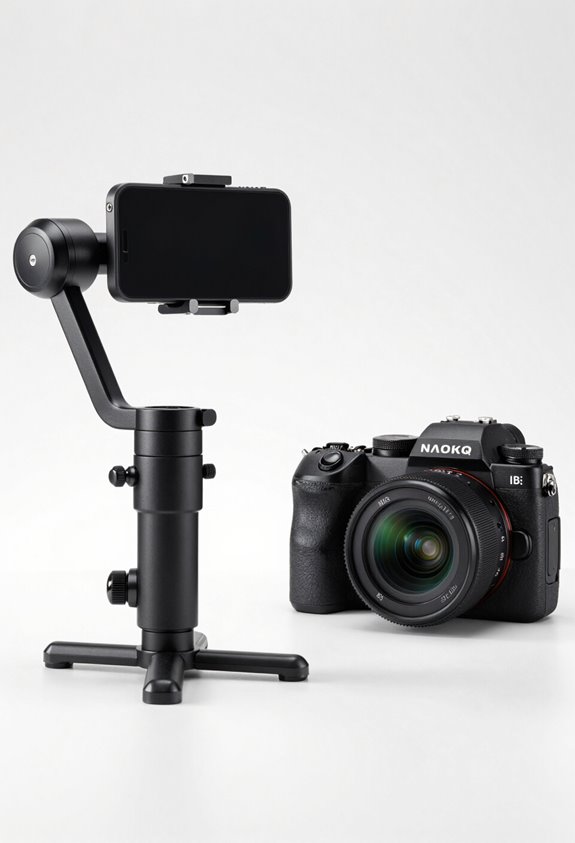
Hey there! So, when you’re trying to choose between gimbals and in-body image stabilization (IBIS) for your video or photo projects, it’s helpful to think about what you really need. Gimbals use motors and sensors to give you steady shots, especially when you’re moving around a lot. Imagine you’re filming a skateboarder zooming by or capturing a lively street scene; a gimbal’s 3-axis support really shines in those moments, keeping everything smooth.
On the flip side, IBIS is perfect when you’re shooting in low light or taking those candid shots indoors. It works by physically shifting the camera sensor to counteract slight shakes, which can be a lifesaver in tricky lighting. For instance, if you’re at a wedding and need to shoot without a flash, IBIS helps you achieve clear images even without that steady surface.
Each tool has its strengths depending on what you’re up to. If you’re frequently bouncing around, consider a gimbal for those moving shots. But if you’re capturing quieter moments, IBIS could be your best friend. So, let’s dive into some situations where one might clearly outshine the other!
Additionally, choosing a gimbal with advanced stabilization technology can significantly enhance the smoothness and quality of your footage during dynamic shooting scenarios.
Understanding Gimbals: Key Features and Benefits
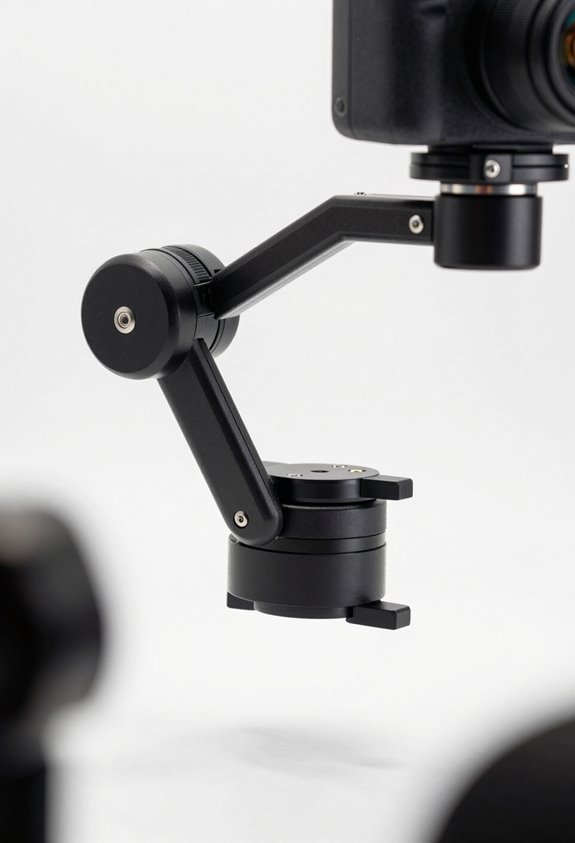
Hey! So, let’s talk about gimbals. If you’re into videography or photography, you know how important stability is, right? Even the tiniest shake can mess up your shot. That’s where gimbals come into play. They’re motorized stabilizers that keep your camera steady by counteracting any movement, whether it’s pitch, yaw, or roll. This means you can shoot smooth, professional-looking videos even when you’re on the move, like capturing a thrilling event or vlog.
But gimbals don’t just keep your footage steady; they often have cool features like subject tracking. Imagine filming a friend riding a skateboard and the gimbal keeps them perfectly in focus while you walk alongside them. Plus, they’re lightweight and compact, making it a breeze to carry them around. You can quickly set them up whenever inspiration strikes! Many models also include auto axis locks to speed up setup and ensure stable shots right from the start.
In-Body Image Stabilization (IBIS): How It Works
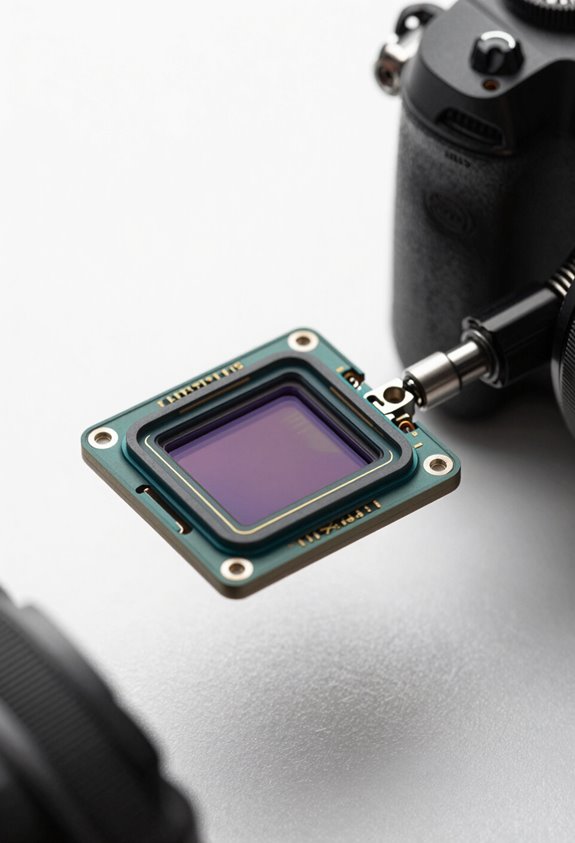
You know how gimbals can make your videos super smooth? Well, there’s another cool way to tackle camera shake called In-Body Image Stabilization, or IBIS for short. Instead of relying on external equipment, IBIS actually shifts the camera’s imaging sensor around to counter any movements on multiple axes. This means you get steadier shots without the need for a tripod, which is especially handy in low-light settings or when you’re shooting wide-angle.
Take the Canon EOS R5 or R6, for instance; they can stabilize your shots by up to 8 stops! That basically means you can shoot at slower shutter speeds without seeing those annoying blurs from camera shake. Plus, because modern mirrorless cameras increasingly come with IBIS, lens designs can be lighter without needing bulky stabilization features. So, whether you’re capturing a sunset or a bustling street scene, you’ll have more flexibility in how you shoot. Now, speaking of flexibility, let’s talk about how these stabilizing technologies impact your overall photography experience. The Canon XA40, for instance, offers 5-axis optical image stabilization to minimize camera shake and enhance video quality in handheld shooting.
Key Situations for Gimbal vs. IBIS Use
When you’re trying to decide between using a gimbal or in-body image stabilization (IBIS), it really comes down to where you’re shooting and what kind of look you’re going for. Gimbals are fantastic for situations where you’re moving around a lot, like when you’re vlogging or covering an event. They keep your camera super steady by balancing it on three axes—pitch, yaw, and roll—so your footage looks smooth no matter how much you’re moving. Imagine filming your friend as they dance at a wedding; a gimbal would help you capture that lively scene without any shaky cam.
On the other hand, IBIS shines in conditions where light is low or when you’re shooting wide angles. It lets you shoot handheld without a tripod, which is pretty handy! For instance, if you’re in a dimly lit café and want to snap a quick photo, IBIS helps you avoid blurry shots caused by tiny movements of your hand. Plus, IBIS is lightweight and sets up fast, which makes it great for those rugged environments where you don’t have time to fiddle with gear.
Both systems really work well together to improve stability no matter the situation. So, whether you’re leaning towards a gimbal for smooth action shots or IBIS for easy handheld photography, knowing how each one fits your needs will help you get the best results in your shooting adventure! Additionally, for extended shoots requiring extra stability and comfort, using a steadicam vest can greatly reduce fatigue and improve footage quality.
Practical Tips for Using a Gimbal Effectively
Hey there! If you’re diving into the world of gimbals, there are a few key tips that can really help you get the best results. First off, make sure your gimbal is balanced before you start shooting. An unbalanced gimbal can put a strain on the motors, which messes with that smooth stabilization we’re after. Picture trying to walk while holding a heavy backpack unevenly—it’s not easy!
Next, don’t forget to experiment with the different modes your gimbal offers. For instance, lock mode keeps your camera steady in one direction, while follow mode allows it to move as you do—great for those sweeping landscape shots. And remember, every time you change your camera or lens, take a moment to recalibrate the gimbal. Just like tuning a guitar, it’s essential to get everything in harmony for the best tracking.
Also, pay attention to how you walk and move. Practice gliding instead of stomping around to keep your shots steady. Think of it like walking on ice—smooth and slow movements help reduce shake. By embracing these practices, you’ll really tap into the full potential of your gimbal, helping you capture some breathtaking footage. Speaking of shooting footage, let’s talk about setting up your shots for maximum impact!
To maximize your shooting time and avoid interruptions, consider the battery life of your gimbal when planning your filming sessions.
Real-World Benefits of In-Camera Stabilization (IBIS)
Have you heard of in-body image stabilization, or IBIS for short? It’s a fantastic feature that really helps photographers and videographers by reducing camera shake. Basically, IBIS works by gently moving the camera’s sensor when you move, which can give you about 5 to 8 stops of stabilization. So, if you’re shooting handheld in a dimly lit room, you can actually use much slower shutter speeds without having to worry too much about blurry images.
For example, if you typically shoot at 1/60th of a second, with IBIS, you might be able to drop down to 1/15th of a second and still get a crisp shot. That’s super helpful when the lighting isn’t ideal! Plus, many Canon cameras have this built-in, which makes it great for using both stabilized and non-stabilized lenses. When you pair IBIS with lenses that also have stabilization, you’re really ramping up your steadiness, especially during action shots or while you’re on the move.
All of this adds exciting possibilities for your photography, especially when you’re out and about and want to capture those spontaneous moments without worrying about shaky footage. Next, let’s talk about how this technology stacks up against other stabilization methods and what it really means for your creative workflow. For video creators, combining IBIS with advanced stabilization technology can result in professional-quality footage even in challenging shooting conditions.
The Role of Optical Image Stabilization in Lenses
Hey there! Let’s chat about Optical Image Stabilization, or OIS, in lenses. It’s a pretty nifty feature that works hand-in-hand with in-body image stabilization (IBIS). If you’ve ever tried taking photos in dim lighting or with a long lens, you might have found that even the slightest shake can lead to blurry images. That’s where OIS comes in—it compensates for those little shakes by adjusting the internal components of the lens, giving you sharper photos.
For example, with lens IS, you can get around 4-6 stops of stabilization. This means you could snap a photo at a slower shutter speed without risking motion blur, which is super helpful when you’re trying to capture that perfect shot of a sunset or a bustling street scene at twilight. Different brands have their own spin on this tech, like Nikon’s Vibration Reduction (VR) and Sony’s Optical SteadyShot (OSS).
And while IBIS is great on its own, combining it with OIS can really enhance your shooting experience, especially when you’re moving around a lot. It’s like having an extra layer of stability that helps you focus on capturing your vision without worrying about the technical stuff. So, if you’re gearing up for your next photo adventure, consider what kind of stabilization tools you have at your disposal. They could make all the difference in your shots! Additionally, incorporating filters such as multi-layer coatings can complement stabilization by improving image clarity and reducing glare.
Combining Gimbals and IBIS: Ideal Scenarios
Hey, you know when you’re out filming and you want everything to look super smooth? Well, combining gimbals with in-body image stabilization (IBIS) can really do the trick! Think of gimbals like sturdy assistant helpers—they keep the camera steady when you’re moving around a lot, like when you’re shooting a soccer game. IBIS, on the other hand, fine-tunes those little shakes that happen when you’re filming handheld, like if you’re trying to catch a candid moment at a party.
As an example, if you’re filming an intense skateboard trick, the gimbal manages all the dramatic movements as the skater jumps around. At the same time, IBIS steps in to smooth out those slight jitters caused just by your hands. When you use both, your footage comes out feeling silky smooth and professional, even in tricky settings. Many advanced gimbals, like the Zhiyun Weebill S, utilize sophisticated stabilization algorithms that complement IBIS to maximize smoothness in your shots.
Making the Right Choice: Gimbals, IBIS, or Both?
When you’re trying to decide between a gimbal, in-body image stabilization (IBIS), or using both, it really comes down to what kind of shooting you’re doing. A gimbal is fantastic for keeping your shots smooth, especially when you’re moving around a lot, like when you’re vlogging or covering events. It stabilizes your camera on three axes, which means even if you’re running to catch a moment, your footage will look steady.
On the other hand, IBIS is great for those subtler shakes, like when you’re holding your camera in low light or shooting wide-angle shots. Picture this: you’re at a dimly lit concert and want to capture the ambiance without blurriness—IBIS would really help here. Plus, when you combine IBIS with lens stabilization, you can achieve up to 8 stops of shake correction, which is pretty awesome for tricky lighting situations.
But if you’re in a fast-paced environment, like shooting a wedding where things are constantly changing, a gimbal might be your best bet even though it takes a moment to set up. So really, it boils down to whether you need quick action or maximum stability. As you consider your options, think about the type of footage you want to capture most often—this will guide your choice! Many filmmakers also take into account camera compatibility to ensure their gear works seamlessly together.
Frequently Asked Questions
Is Image Stabilization Better Than Gimbal?
We think image stabilization’s often better for casual users, as it offers quick adjustments. However, gimbal performance factors excel in dynamic situations. Evaluating user experience reviews and specific use cases helps us determine the best option.
What Are the Disadvantages of a Gimbal?
Despite their amazing footage capabilities, we can’t ignore gimbal weight, cost, complex setup, and battery limitations that often slow us down, frustrate our creativity, and make capturing spontaneous moments feel like climbing a mountain in cement shoes.
Are Gimbals Still Worth It?
Yes, gimbals are still worth it! Their versatility, lightweight design, and quick setup let us capture stunning footage creatively. While price can be a factor, the benefits often outweigh the investment for dynamic filming.
Which Is Better, Gyro, EIS or OIS?
We’d say it’s a toss-up! Gyro stabilizers dance with movement, electronic stabilization plays peekaboo, while optical technology whispers “hold still.” Performance comparison depends on our whims; each has its charm in our creative toolkit.


